
Agencies | Washington:
The US House of Representatives has passed a sweeping bipartisan sanctions bill targeting Russia over its continued war in Ukraine, sending the legislation to President Donald Trump for his signature.
The Lindsey O. Graham Sanctioning Russia and Iran Act of 2026 cleared the House by a 262-159 vote on Wednesday. The Senate had already approved the measure, clearing the way for it to reach the President’s desk.
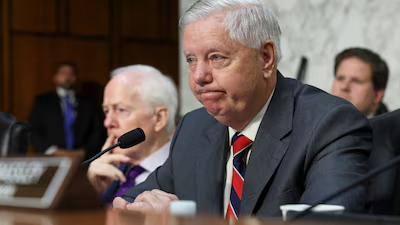
The legislation, championed by the late Republican Senator Lindsey Graham of South Carolina, would significantly expand Washington’s ability to impose economic pressure on Russia and countries that continue to purchase its energy.
One of the most consequential provisions would give Trump the authority to impose tariffs of up to 100 per cent on countries that purchase Russian oil and gas under specified conditions.
The measure could affect major buyers of Russian energy, including India and China. However, the legislation does not automatically impose a 100 per cent tariff on either country. Rather, it gives the President discretionary authority to impose such duties if he chooses to use the powers provided under the law.
The provision is intended to increase pressure on countries that continue to provide an important market for Russian energy exports and, indirectly, on Moscow’s revenues from the energy sector.
The legislation also targets Russian officials, banks and vessels associated with sanctions evasion, including the network commonly referred to as Russia’s “shadow fleet”.
The vote crossed party lines, with 203 Republicans and 58 Democrats joining an Independent in supporting the legislation, while seven Republicans and 152 Democrats voted against it.
Supporters said the bill would strengthen Washington’s ability to pressure Russian President Vladimir Putin and restrict the financial resources supporting the war in Ukraine.
House Speaker Mike Johnson welcomed the passage, saying the legislation would place greater economic pressure on Russia and provide the Trump administration with additional tools to respond to Moscow.
However, senior Democrats raised concerns about the broad tariff powers being handed to the White House.
House Democratic Leader Hakeem Jeffries opposed the legislation, arguing that the tariff provisions could be used against US allies and that exemptions and presidential discretion could weaken the intended sanctions regime.
Ukrainian President Volodymyr Zelenskyy had urged US lawmakers to approve the measure and welcomed congressional action on sanctions against Russia.
Supporters of the bill argue that tougher economic measures could increase pressure on Moscow to negotiate an end to the war, while critics have questioned whether expanded tariff powers could create new trade tensions with countries that maintain economic ties with Russia.
The legislation represents the most significant Ukraine-related sanctions action by Congress since the Trump administration returned to office, after months of negotiations and political uncertainty over the measure.
The bill was initially associated closely with Graham, who spent more than a year negotiating the package before his death in July. It was subsequently renamed in his honour.
The legislation also includes provisions extending sanctions related to Iran, reflecting negotiations that helped secure support from the Trump administration.
With both chambers of Congress having approved the legislation, the next step is presidential action. Trump is expected to sign the bill into law.
Once enacted, the legislation would provide the administration with a significantly expanded sanctions and tariff framework. Whether and when Trump uses the new authority against major purchasers of Russian energy will determine its immediate impact on countries such as India and China.
For Russia, the measure could further restrict access to international finance and energy markets. For Washington’s trading partners, meanwhile, the prospect of secondary tariffs introduces another layer of uncertainty into an already complicated global trade and energy environment.