
Reported By | Syed Salman
Jammu and Kashmir stands at a dangerous environmental crossroads. The Union Territory, once celebrated for its pristine lakes, dense forests, snow-covered mountains and rich biodiversity, is today witnessing rapid ecological degradation driven by climate change, unchecked urbanisation, deforestation, pollution and unplanned development.
Despite facing some of the most severe environmental vulnerabilities in the Himalayan region, Jammu and Kashmir still lacks a dedicated Department or Ministry for Environment and Climate Change with an exclusive policy, budgetary and administrative mandate to address the growing crisis.
Environmental governance in Jammu and Kashmir currently remains scattered across multiple departments, including Forest, Ecology and Environment, Disaster Management, Tourism, Urban Development, Irrigation and Flood Control, and Pollution Control authorities. Experts believe this fragmented system has weakened long-term planning and delayed coordinated climate action in the region.
With rising temperatures, shrinking glaciers, frequent floods, erratic snowfall, prolonged dry spells and increasing urban pollution, there is a growing demand from environmentalists, researchers, urban planners and civil society groups for the creation of a separate Ministry for Environment and Climate Change in Jammu and Kashmir.
A Region on the Frontline of Climate Change
Jammu and Kashmir is among the most climate-sensitive regions in South Asia because of its fragile Himalayan ecosystem. Scientific studies have repeatedly warned that the Himalayan belt is warming faster than many other regions of the world.
Over the past two decades, Kashmir has witnessed alarming changes in weather patterns. Winters have become shorter and warmer, snowfall has declined significantly in many areas, and summers are becoming increasingly hotter.
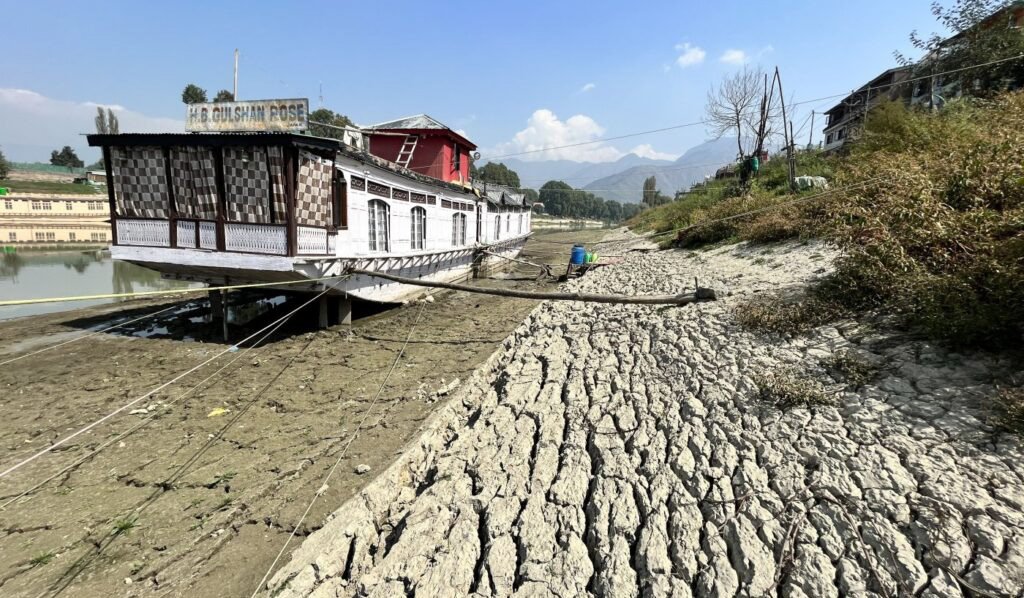
The impact is clearly visible in the Valley’s glaciers and water bodies. Several glaciers in the Kashmir Himalayas are retreating rapidly, threatening long-term water security for millions of people dependent on rivers, springs and streams originating from these glaciers.
Environmental experts have also raised concern over the declining health of iconic water bodies such as Dal Lake, Wular Lake and Anchar Lake, which are facing pollution, encroachment, weed infestation and shrinking water spread areas.
Wetlands across Kashmir are disappearing at an alarming pace due to urban expansion and illegal construction. Hokersar Wetland, a Ramsar site and an important habitat for migratory birds, has witnessed ecological stress because of pollution and encroachments.
At the same time, the Jammu region is increasingly experiencing extreme heatwaves, water scarcity and forest fires, further underlining the need for region-specific climate planning.
Rising Frequency of Natural Disasters
Climate change has also intensified the frequency and severity of natural disasters in Jammu and Kashmir.
The devastating floods of September 2014 exposed the vulnerability of urban planning and disaster preparedness in the Valley. Experts later pointed to wetland destruction, river encroachments and poor urban drainage as major factors behind the scale of the disaster.
In recent years, cloudbursts, flash floods, landslides and avalanches have become more frequent in both Kashmir and Jammu divisions. Mountain roads, including strategic highways, are repeatedly disrupted by landslides triggered by erratic rainfall patterns and reckless construction activity.
Environmentalists argue that without a dedicated climate institution capable of integrating environmental concerns into infrastructure planning, tourism expansion and urban development, the ecological crisis will continue to worsen.
Tourism Growth Without Ecological Planning
Tourism remains one of the most important sectors of Jammu and Kashmir’s economy, attracting millions of visitors annually. However, environmental experts warn that the rapid expansion of tourism infrastructure without ecological safeguards is putting enormous pressure on fragile ecosystems.
Popular destinations such as Gulmarg, Pahalgam, Sonamarg and Srinagar are witnessing increasing waste generation, traffic congestion, deforestation and stress on water resources.
The growing trend of mass tourism in ecologically sensitive regions has also increased pressure on alpine meadows, forests and glaciers.
Experts say a dedicated Environment and Climate Change Ministry could frame sustainable tourism policies, regulate construction in eco-sensitive zones and introduce climate-resilient tourism models.
Urban Pollution Becoming a Major Threat
Srinagar, once known for its clean air and natural environment, is now witnessing rising levels of air pollution, traffic congestion and unregulated urban expansion.
The increasing number of vehicles, construction activities and improper waste disposal systems have contributed to deteriorating air and water quality in urban centres.
Solid waste management remains a major challenge in both Jammu and Srinagar cities. Plastic pollution in lakes, streams and tourist destinations has become a serious environmental concern.
Experts believe environmental regulation in Jammu and Kashmir remains weak because pollution control mechanisms often function without strong policy coordination or adequate enforcement capacity.
Why J&K Needs a Separate Ministry
Policy experts argue that a dedicated Ministry for Environment and Climate Change would help Jammu and Kashmir develop a long-term climate resilience strategy tailored to its unique ecological vulnerabilities.
Such a ministry could focus exclusively on:
- Climate adaptation and mitigation policies
- Glacier and water resource monitoring
- Wetland and biodiversity conservation
- Scientific urban planning
- Air and water pollution control
- Forest and wildlife protection
- Climate-resilient agriculture
- Sustainable tourism policies
- Disaster risk reduction
- Environmental impact assessments
- Renewable energy transition
- Community-based conservation programmes
Experts say the proposed ministry should work in coordination with universities, scientific institutions, disaster management authorities and international climate organisations to create data-driven environmental policies.
Need for Climate Budgeting and Research
Another major challenge in Jammu and Kashmir is the absence of a dedicated climate budget and institutional climate research framework.
Environmental projects often remain dependent on centrally sponsored schemes or fragmented departmental allocations. Experts believe a dedicated ministry could create a climate finance mechanism for long-term sustainability projects.
There is also growing demand for a Climate Change Research Institute in Jammu and Kashmir to study glacier retreat, hydrological changes, biodiversity loss, urban pollution and changing agricultural patterns.
Such an institution could help policymakers make informed decisions based on scientific evidence rather than short-term administrative priorities.
Protecting the Himalayas Is an Economic Necessity
Environmental degradation is no longer only an ecological issue; it has become a direct economic concern for Jammu and Kashmir.
Agriculture, horticulture, tourism, hydropower and drinking water systems all depend heavily on environmental stability. Climate disruptions are already affecting apple production, saffron cultivation and water availability in several districts.
Unregulated development may provide short-term economic gains, but experts warn that ecological collapse in the Himalayas could lead to long-term economic instability, migration pressures and disaster-related losses.
Time for Institutional Reform
As climate risks continue to intensify, experts believe Jammu and Kashmir can no longer treat environmental governance as a secondary administrative subject.
The creation of a dedicated Ministry for Environment and Climate Change would not only strengthen ecological protection but also ensure that development policies are aligned with sustainability and disaster resilience.
For a region as environmentally fragile and strategically important as Jammu and Kashmir, protecting nature is no longer just about conservation — it is about safeguarding livelihoods, public health, water security and the future of generations to come.