
Agencies | Kolkata:
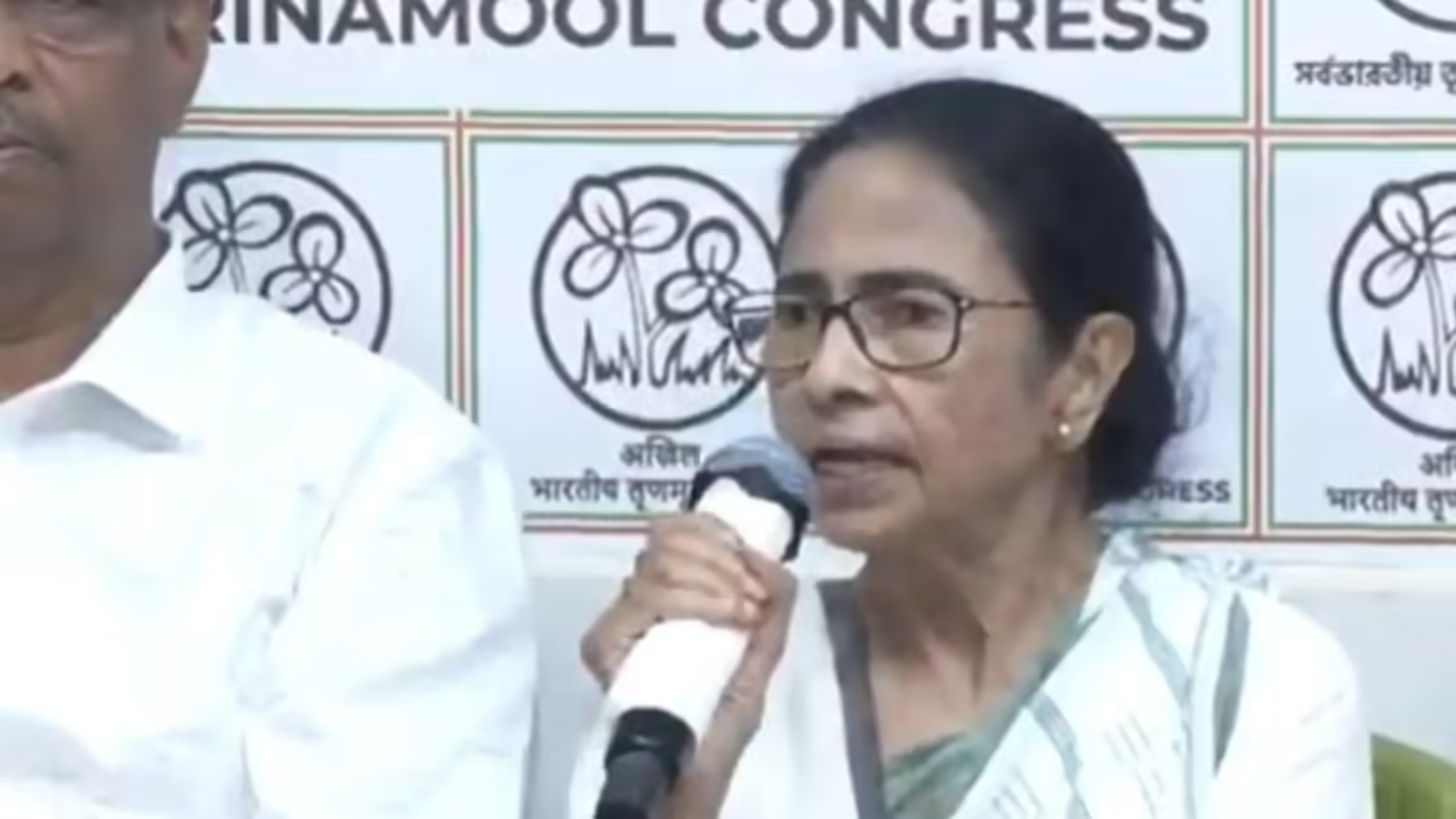
A day after the BJP emerged victorious in the West Bengal Assembly elections, Trinamool Congress (TMC) chief Mamata Banerjee on Tuesday refused to resign as Chief Minister, asserting that her party had not lost the mandate and alleging that the verdict had been “looted.”
“I have not lost, so I will not go to Raj Bhavan. I will not tender my resignation,” Banerjee told reporters during a press conference in Kolkata.
She claimed that the BJP’s victory was the result of manipulation, reiterating her allegation that nearly 100 seats had been “stolen” in the election process. Banerjee further accused the Election Commission of India (ECI) and the central government of acting in concert to influence the outcome.
“This is not how democracy works. When the judiciary is not there, when the Election Commission is biased and the government seeks one-party rule, it sends a wrong message to the world,” she said.
Escalating her criticism, the TMC supremo alleged that the poll body had played “nasty games,” adding that her real contest was not against the BJP but against the Election Commission itself. She also accused the Centre of “direct interference,” claiming that similar electoral manipulation had occurred in states like Maharashtra, Haryana and Bihar.
While refraining from outlining her party’s next political steps, Banerjee said leaders from the INDIA bloc had reached out to her and extended support.
Constitutional Position
Under India’s constitutional framework, a Chief Minister must enjoy the confidence of the State Legislative Assembly to remain in office. Once election results indicate a loss of majority, convention requires the Chief Minister to resign and submit the Council of Ministers’ resignation to the Governor.
If the incumbent refuses to step down, the Governor is empowered to act. As per Article 164(1) of the Constitution, ministers hold office “during the pleasure of the Governor.” In cases where the government no longer commands majority support, the Governor may withdraw this pleasure and dismiss the Council of Ministers.
The Governor may then invite the leader of the majority party or coalition to form the government or ask a claimant to prove majority on the Assembly floor.
With the election results indicating that the TMC no longer holds a majority, the constitutional spotlight now shifts to the Governor, who is expected to assess the situation and determine the next course of action.