
Agencies | Washington/Tehran:
US President Donald Trump on Wednesday signed an interim agreement with Iran aimed at ending months of hostilities and paving the way for negotiations over Tehran’s nuclear programme, while offering significant sanctions relief and permitting the unrestricted sale of Iranian oil.
The agreement, brokered with the assistance of Pakistan, took immediate effect following its signing by leaders of both countries, according to Pakistani Prime Minister Shehbaz Sharif.
Under the accord, Iran has agreed to dilute its stockpile of highly enriched uranium and enter into a 60-day negotiation process to reach a comprehensive settlement regarding its nuclear activities. In return, the United States will move to waive several key sanctions, enabling Iran to freely export oil and potentially unlocking broader economic relief in the future.
The deal marks a major diplomatic breakthrough after months of conflict and uncertainty. It calls for a permanent cessation of hostilities, the reopening of the strategically vital Strait of Hormuz, and the resumption of direct nuclear talks between Washington and Tehran.
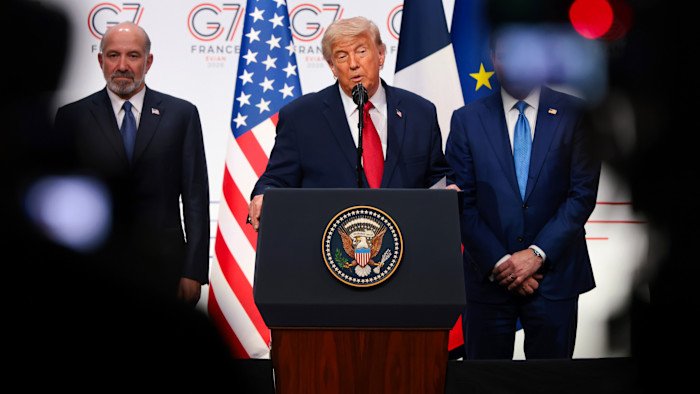
Speaking after signing the agreement alongside French President Emmanuel Macron at the Palace of Versailles, Trump described the accord as “very strong” while cautioning that military action could resume if negotiations fail.
“This was not easy,” Trump said before signing the document, according to footage shared by French officials.
In Tehran, Iranian President Masoud Pezeshkian formally signed the agreement on behalf of Iran. Iranian state media published images showing both leaders’ signatures on the document.
While the full text of the agreement has not been officially released, draft details circulated by both sides indicate that the accord largely restores pre-war arrangements, including reopening maritime trade routes and reducing tensions in the Gulf region.
A key feature of the deal is the immediate easing of sanctions on Iran’s oil sector, a move widely viewed as a major concession by Washington. Analysts note that the measure grants Tehran access to billions of dollars in potential revenue before a final agreement is reached.
The accord also envisages the eventual lifting of additional US and UN sanctions, contingent on progress in future negotiations. Some provisions reportedly include international investment support for Iran’s reconstruction and economic recovery.
The agreement further addresses regional security concerns by reaffirming Lebanon’s territorial integrity amid ongoing tensions involving Israel and Hezbollah. However, differing interpretations of these provisions could emerge as negotiations progress.
The interim accord falls short of some of the broader objectives previously outlined by the Trump administration, including the complete dismantling of Iran’s missile capabilities and regional proxy networks. Nevertheless, officials have portrayed it as a significant step toward de-escalation and long-term stability.
The reopening of the Strait of Hormuz is expected to provide immediate relief to global energy markets after months of disruption that drove up oil prices and affected international trade.
The coming 60 days are likely to prove critical as negotiators work toward a comprehensive agreement that could redefine relations between the United States and Iran and reshape the geopolitical landscape of the Middle East.