
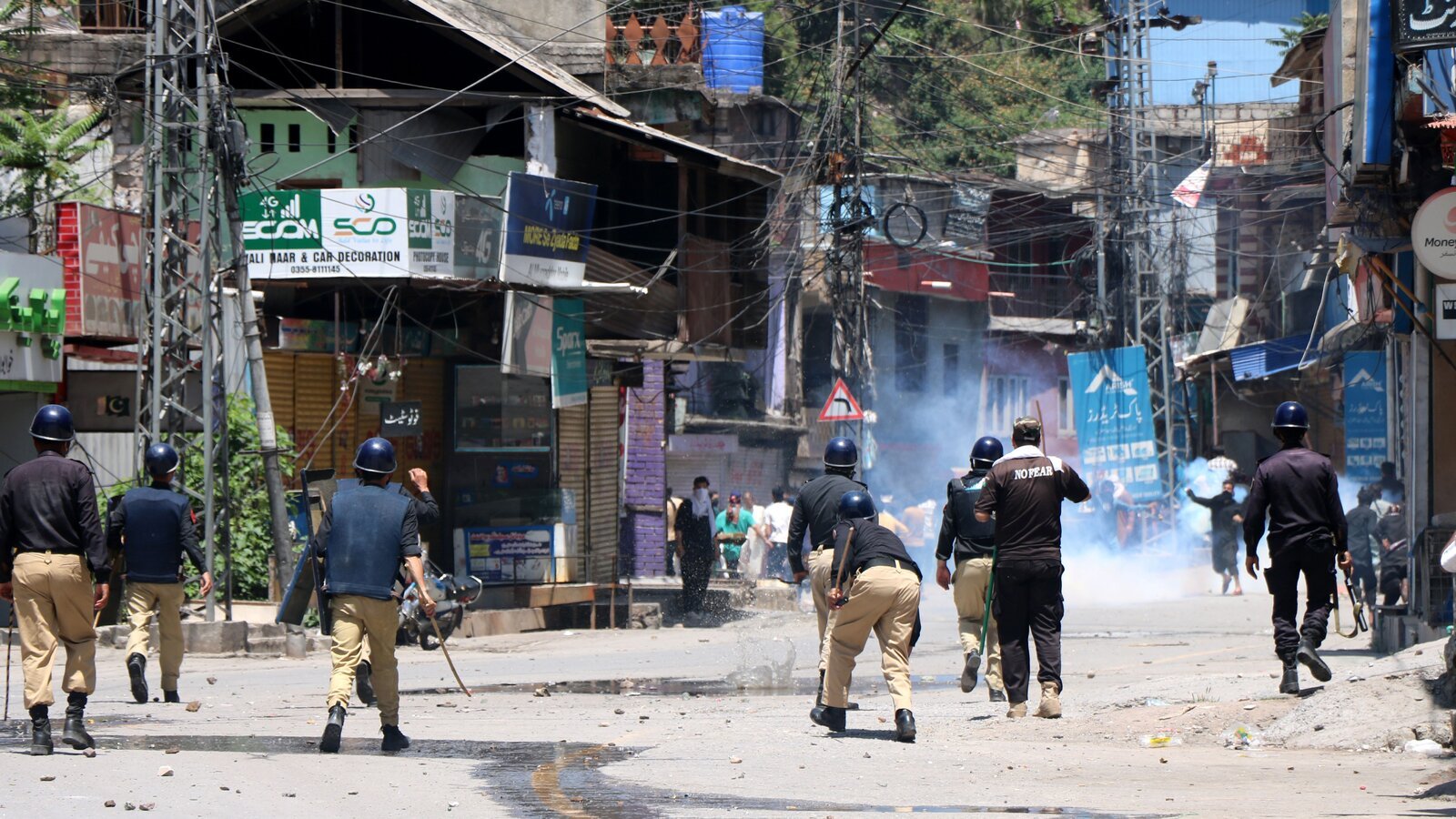
Examiner News Desk | Srinagar:
Pakistan-occupied Kashmir (PoK) has witnessed a significant rise in public unrest in recent months, as demonstrations, strikes, and peaceful rallies spread across several towns and districts. The growing wave of protests reflects mounting frustration among residents over economic hardship, governance issues, and political representation, bringing renewed attention to the region’s long-standing challenges.
The immediate spark behind the unrest has been the sharp increase in the cost of living. Rising inflation, higher electricity tariffs, and shortages of essential goods have placed considerable financial pressure on households. Many residents argue that basic necessities have become increasingly unaffordable, while stagnant wages and limited employment opportunities have further deepened economic insecurity.
Beyond economic concerns, the protests have highlighted broader questions about governance. Many demonstrators believe that local institutions should have greater authority in shaping policies that directly affect the region. Critics contend that important administrative decisions are made outside the territory, leaving local communities with limited influence over matters such as development, resource allocation, and public services.
Human rights organisations have also expressed concern over restrictions on freedom of expression and the handling of demonstrations. Pakistani authorities, however, have maintained that security measures are necessary to preserve law and order and ensure public safety amid the unrest.
At the heart of the movement are several key demands voiced by protesters:
- Relief from inflation and lower electricity tariffs.
- Increased employment opportunities and sustainable economic development.
- Greater political autonomy and stronger local governance.
- Protection of civil liberties, including the right to peaceful assembly and free expression.
- Improved transparency, accountability, and responsiveness in public administration.
In response to the protests, officials have announced relief measures and initiated discussions with community representatives. While these steps have been welcomed by some, many residents believe that temporary economic relief alone will not resolve the underlying issues. Protest leaders continue to call for meaningful structural reforms that address both economic challenges and governance concerns.
Observers note that the future stability of Pakistan-occupied Kashmir will depend on constructive dialogue between authorities and local communities. Addressing public grievances through inclusive governance, economic reforms, and greater civic engagement could help ease tensions, while a lack of lasting solutions may prolong uncertainty.
As the situation continues to evolve, the voices of ordinary residents have brought renewed focus to the economic, political, and social issues shaping life in Pakistan-occupied Kashmir. Whether these protests lead to meaningful reforms or further confrontation remains to be seen, but they underscore the growing demand for change across the region.